
Care
How to wash linen
Forty degrees, no fabric softener and no iron. Caring for linen is easier than you might think.
Pellava, Helsinki · · 5 min
Linen is one of the oldest known textile fibres, and a well-cared-for linen sheet easily lasts ten years. Washing linen needs no special detergent or programme. You just need to get the temperature, the detergent and the drying right. This guide covers how to wash, dry and iron linen bedding, why linen shrinks and how to avoid it.
Before the first wash
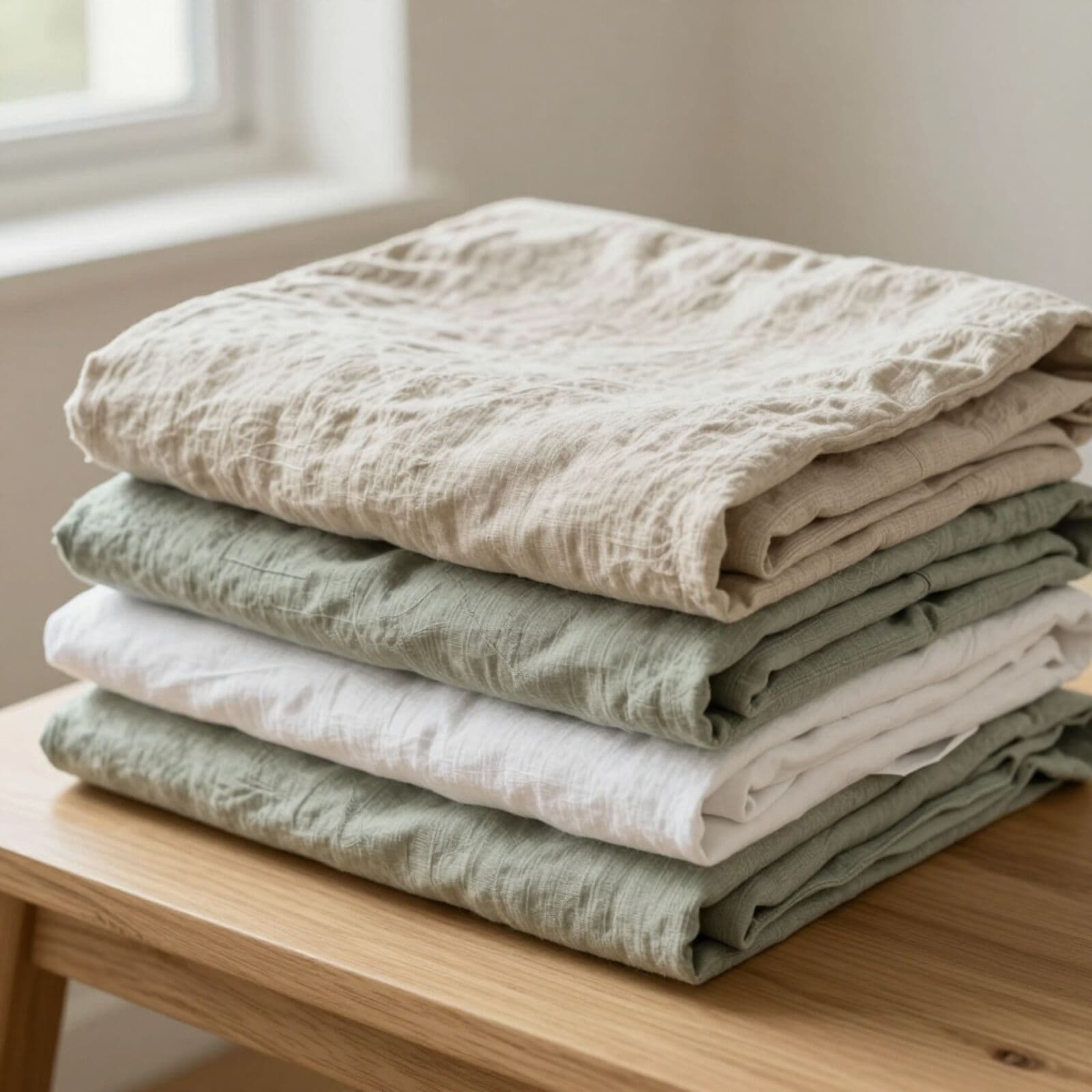
Our washed linen is stone-washed before sewing, so it is soft straight out of the packet. You can wash the sheets before you use them if you like, but you don't have to. If you do, wash dark and light colours separately the first time. Turn duvet covers and pillowcases inside out so that smaller items don't end up inside them. A new sheet can feel a little crisper at first than one that has been used for a long time, and it softens over the first few washes.
Wash at 40 degrees
Linen can be washed at up to 60 °C, but 40 °C is enough for everyday bedding. Hotter water barely cleans better, and it wears the fibre and fades colours faster. Save the 60 °C wash for when you really need it, for example after someone in the house has been ill. Choose a normal coloureds or cotton programme. You don't need a delicates cycle, because linen is a strong fibre that copes well with the movement of the machine.
Fill the drum no more than half to two-thirds full. Linen absorbs a lot of water and gets heavy when wet, so it needs room to move. In an overloaded machine the wash doesn't rinse properly and creases more. Choose a medium spin speed. A fast spin presses deep folds into the fabric that are hard to get out.
Detergent and fabric softener
Use a mild detergent without bleach, and dose as the packet says or a little less. Too much detergent stays in the fibre and makes the fabric stiff. A colour detergent suits coloured linen. Don't use bleach, because it weakens the fibre.
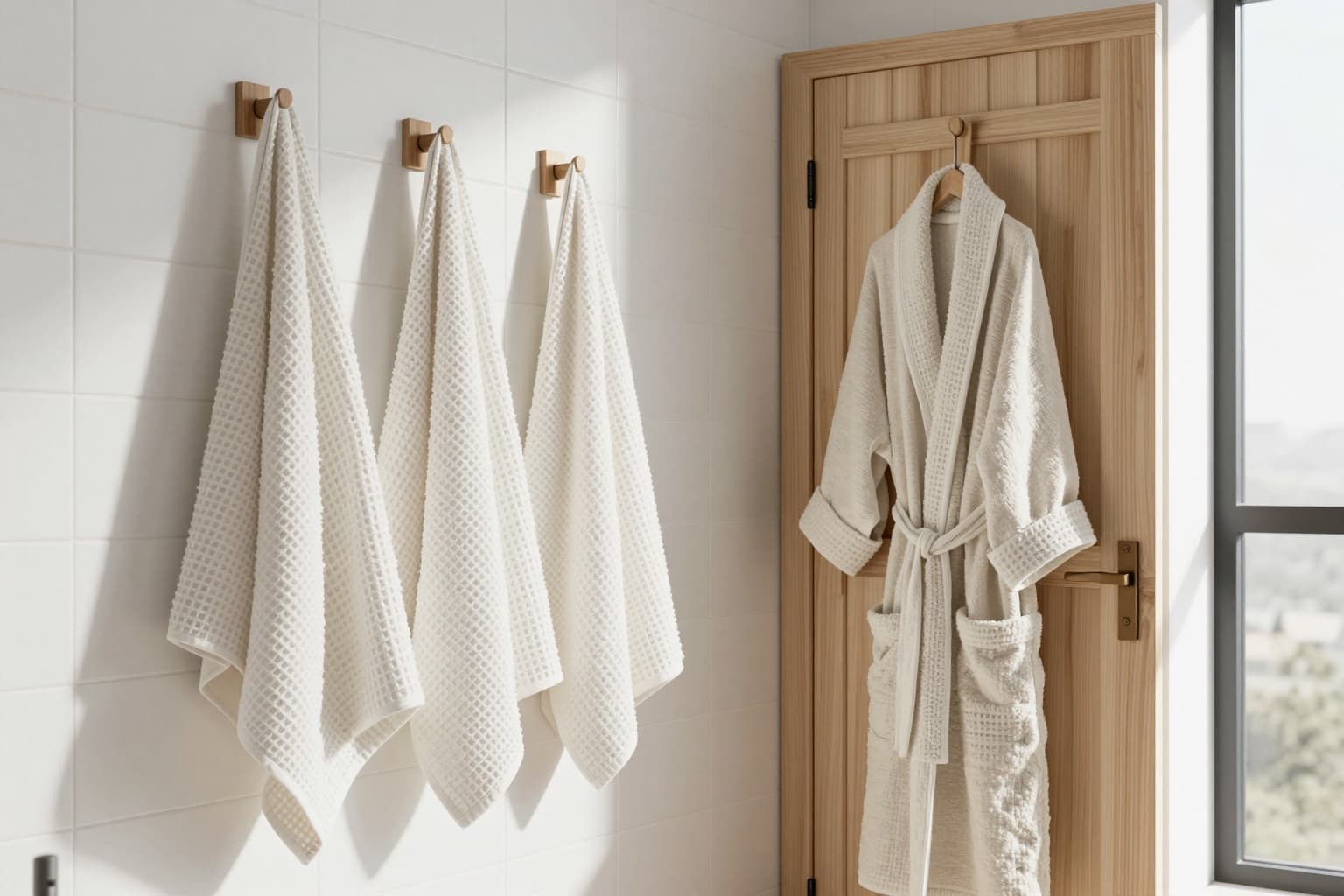
Leave out fabric softener altogether. It leaves a film on the fibre that reduces the linen's ability to absorb and move moisture, and that ability is what makes linen feel cool on the skin. The same goes for towels: softener reduces their absorbency, so leave it out when you wash your towels too. Linen gets softer by itself with every wash.
Does linen shrink?
Linen can shrink if it hasn't been pre-shrunk. Most shrinkage happens in the first few washes, and hot water and a hot tumble dryer make it worse. Our linen is stone-washed and pre-shrunk before sewing, so it keeps its size as long as you wash at 40 °C and avoid hot tumble drying.
If a sheet feels a little smaller after washing, stretch it gently while it is still damp. Damp fibre gives more easily than dry fibre, so shape the sheet as soon as you take it out of the machine.
Drying on the line or in the dryer
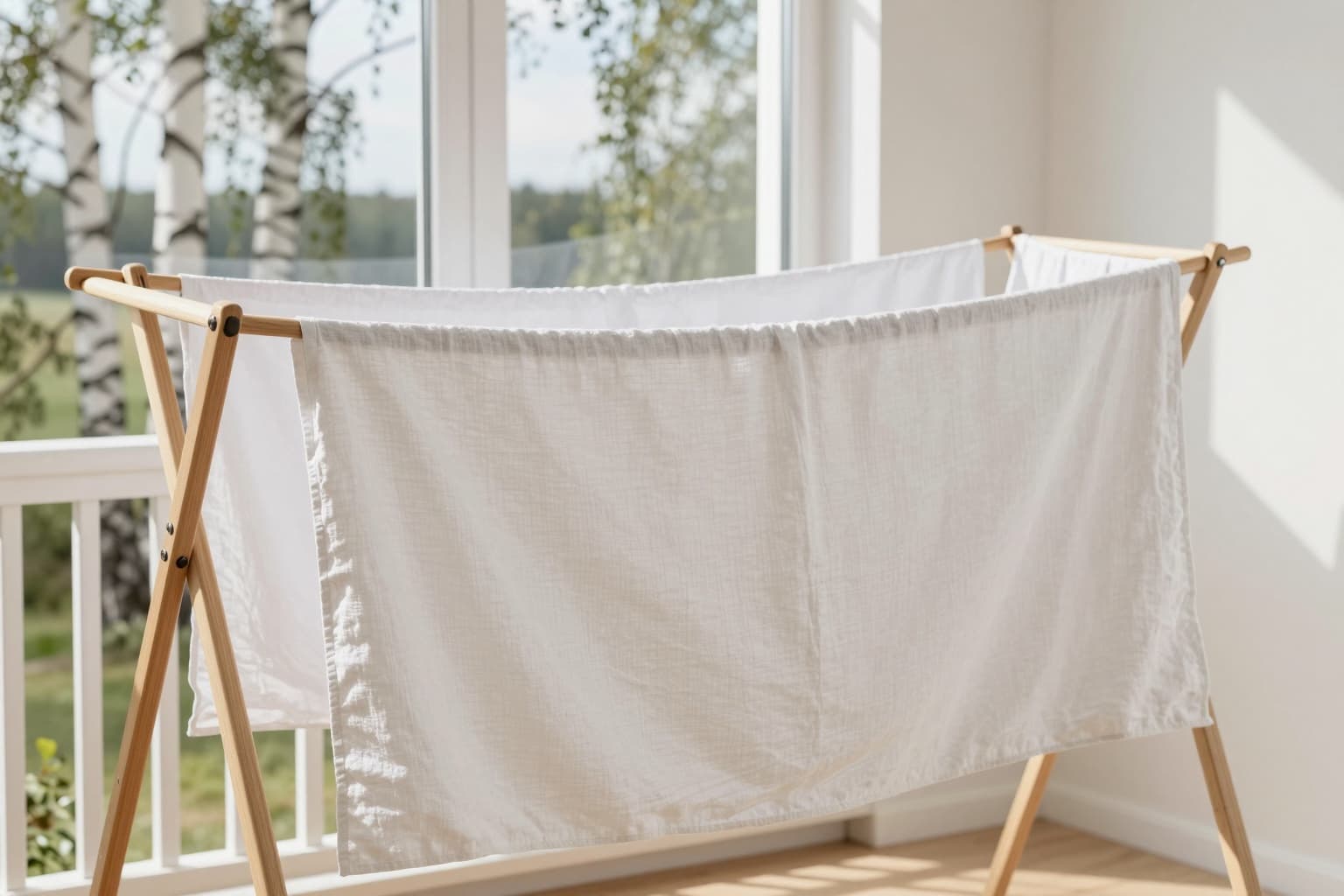
The best way to dry linen is on a line, indoors or out. Shake the sheets out as you take them from the machine and hang them straight, so gravity pulls out the worst creases. Indoors, hang a sheet over two lines so the air can circulate and the fabric dries evenly. In winter, washing dried outside in frosty air smells fresh.
Avoid hot tumble drying. High heat wears the fibre and makes it shrink. If you use a dryer, choose low heat and take the sheets out while they are still slightly damp. Spread them straight onto the bed or hang them up to finish drying. The surface stays smoother than when they are tumbled bone dry.
Ironing linen
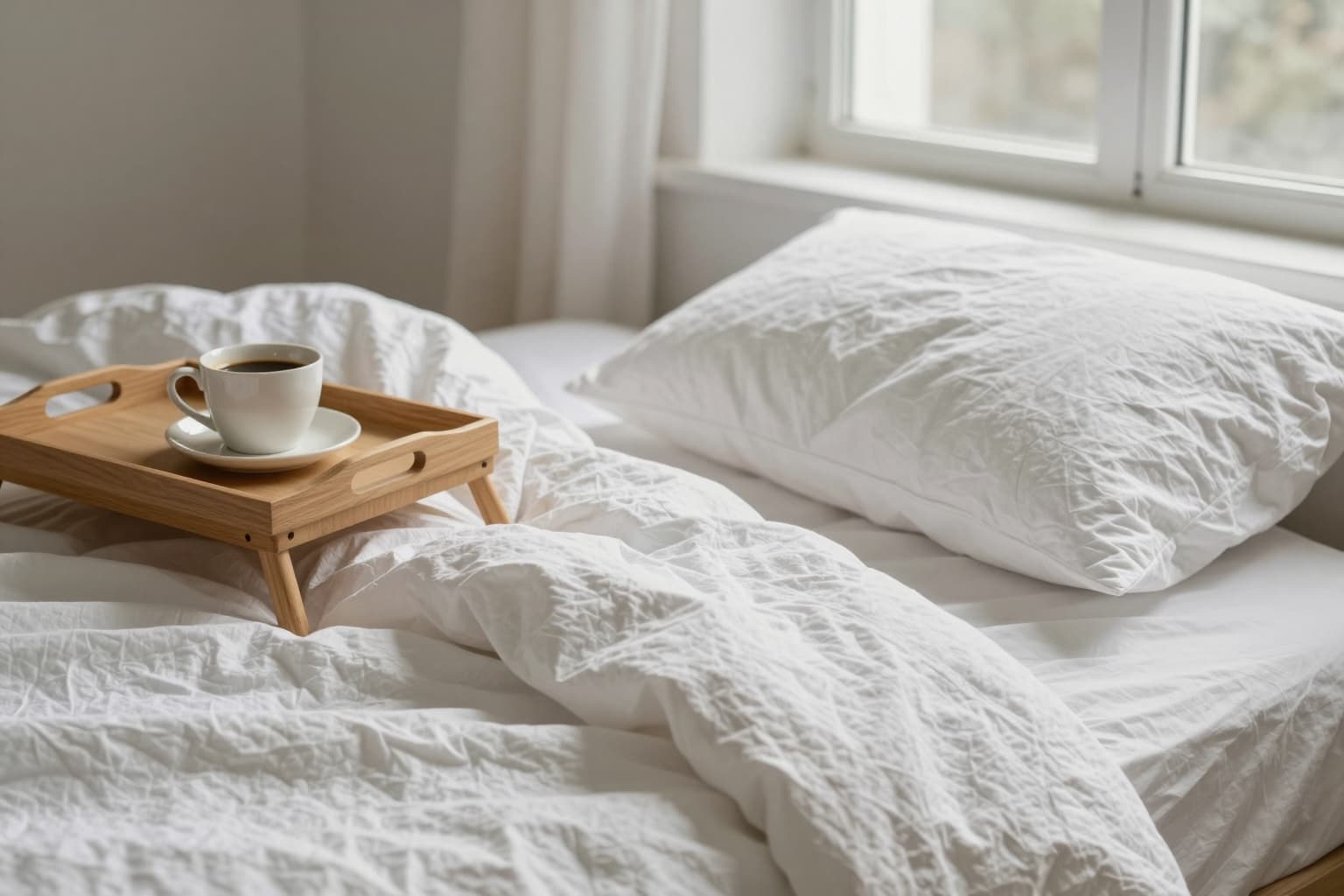
Washed linen is made to look lived in, and the soft creases are part of its character. Most of our customers never iron their linen sheets. If you want a smoother surface, iron the linen while it is damp. Dry linen is hard to get smooth, so mist it with a spray bottle or iron it straight off the line.
Use a medium heat and iron on the reverse side so the surface doesn't turn shiny. Steam helps. You can also pull duvet covers and pillowcases straight by hand and fold them while damp, so they lie flat in the cupboard.
Stains and yellowing
Rinse a fresh stain in cold water as soon as you can. Hot water can set blood and other protein stains in the fibre. Treat the stain with a mild detergent, then wash the sheet as usual. Coffee and red wine stains also come out best when you rinse them straight away. Light sheets can yellow over time from skin oils. Regular washing and a thorough rinse prevent this better than an occasional hot wash.
How often should you wash linen sheets?
Wash sheets and pillowcases about once a week. If you sweat a lot at night or a pet sleeps on the bed, wash them more often. Linen dries quickly, so a weekly wash is not much work. Air the duvet and pillow every time you change the sheets, and the bed stays fresh for longer.
Storage and rotation
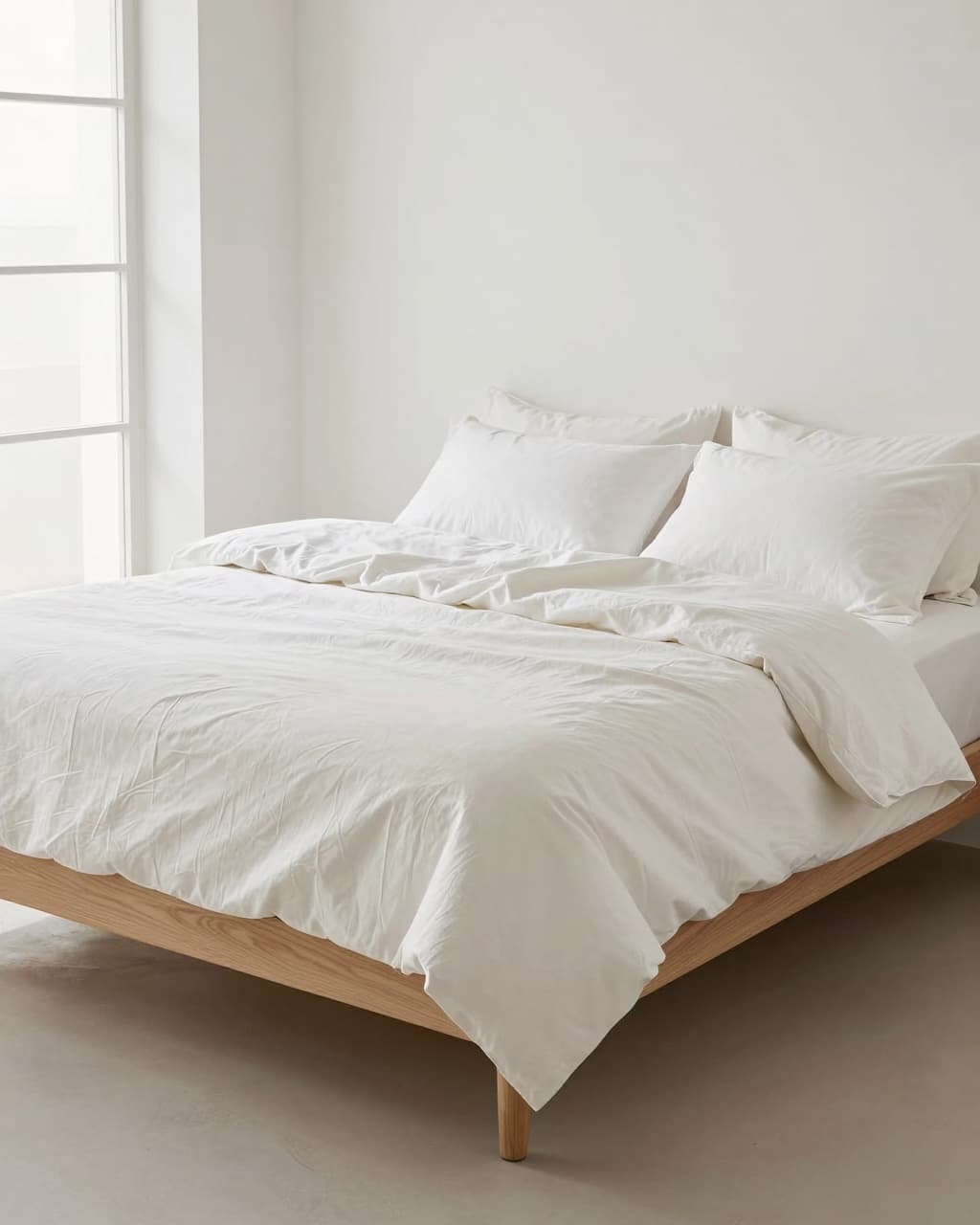
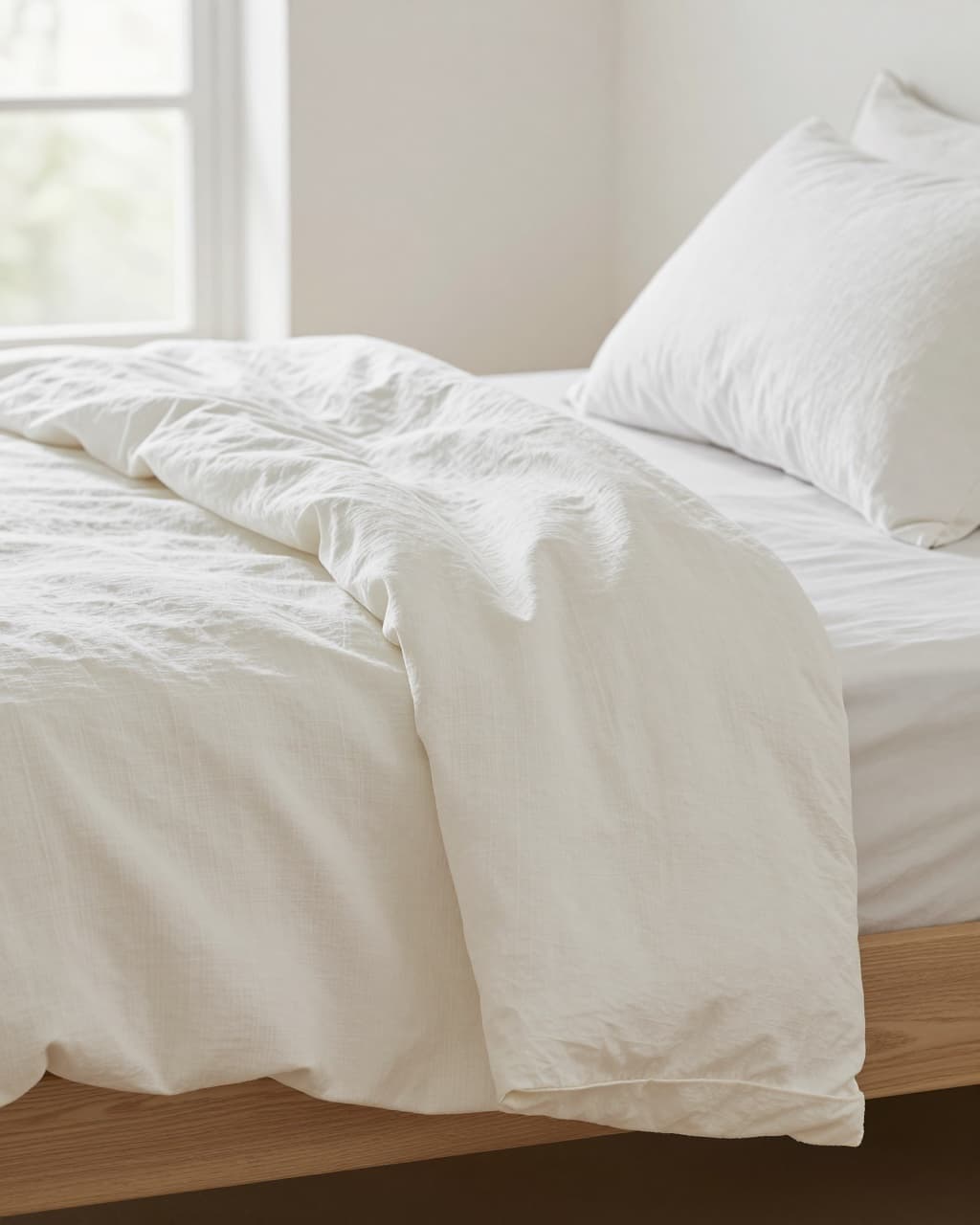
Store clean sheets somewhere dry and airy, not in a plastic bag. With two sets of bedding in rotation, each set rests between washes and lasts longer. Make sure the sheets are completely dry before they go into the cupboard. Washing folded while damp soon starts to smell musty. If you are thinking about a second set, our washed linen duvet cover is made from the same 160 g/m² linen and is OEKO-TEX Standard 100 certified.
In short
Wash at 40 °C with a mild detergent in a machine that isn't overloaded. Leave out fabric softener and bleach. Dry on a line or on low heat, and take the sheets out of the dryer while they are damp. Iron only if you want to, and then damp and on the reverse side. If you are still choosing a material, read our comparison linen or cotton.
Products from this article
 Favourite
Washed linen duvet cover
Washed linen · 8 colours
from €119.00
Washed linen pillowcases, set of 2
Washed linen · 8 colours
from €49.00
Washed linen fitted sheet
Washed linen · 8 colours
from €69.00