

Slow living
Sleep rituals for the dark season
When the mornings are dark, the bedroom has to do more of the work. Five small changes that make a big difference.
Pellava, Helsinki · · 4 min
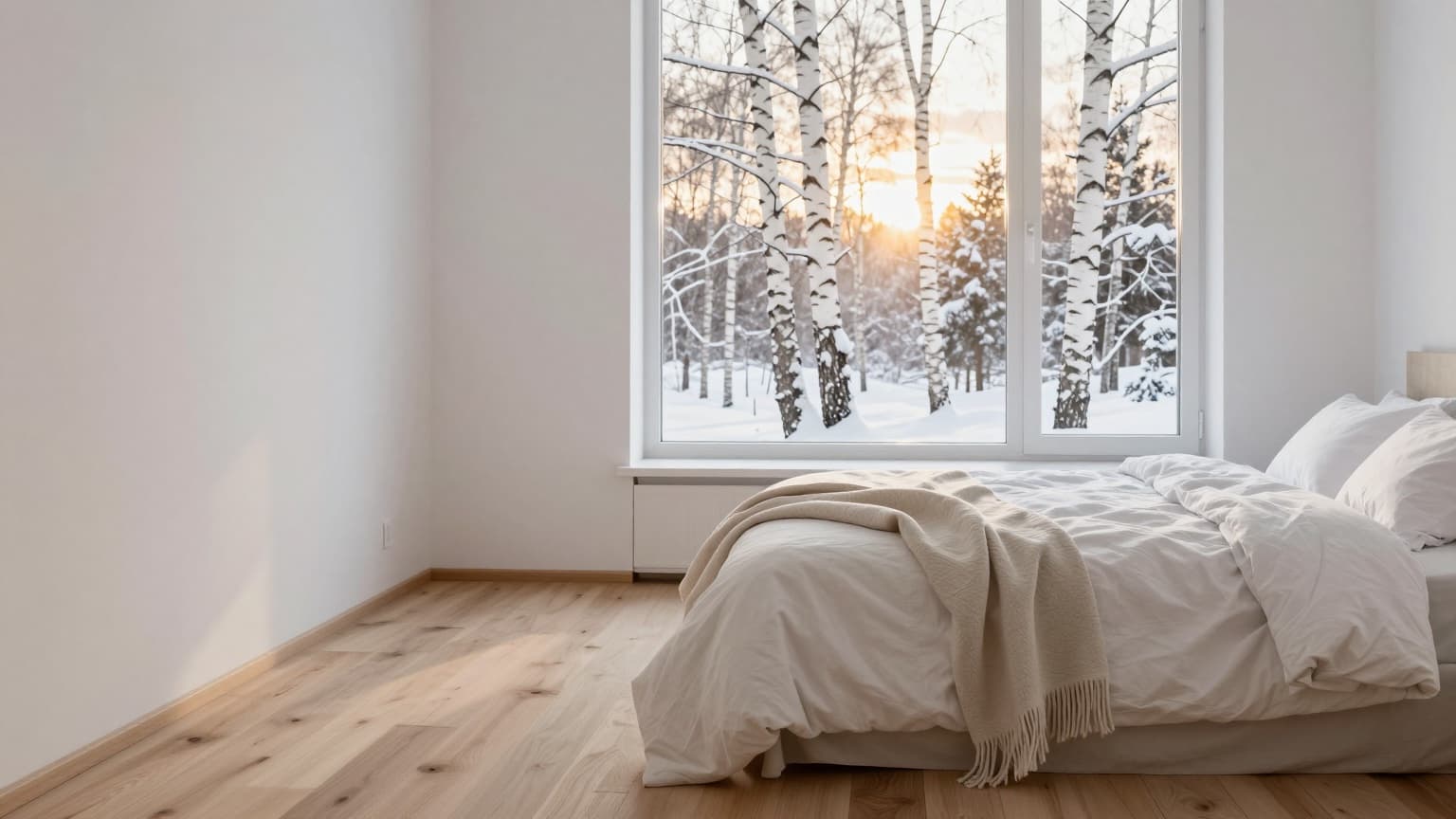
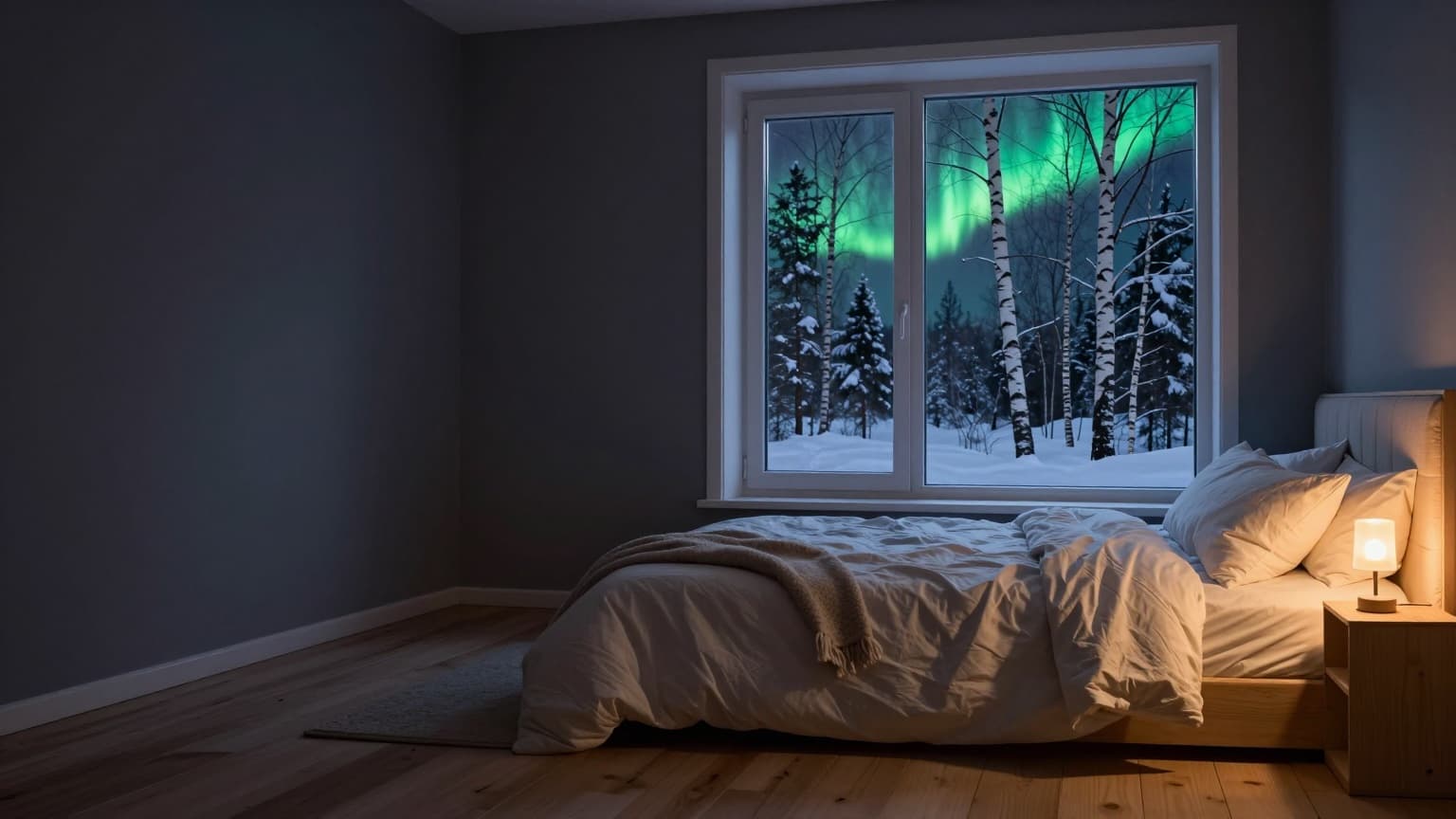
By mid-November the sun doesn't rise in Helsinki until after eight, and just before Christmas not until almost half past nine. Further north there is even less light. With so little daylight, the body's internal clock loses its strongest cue, and many people notice that they fall asleep later and wake up tired. You can't change how much light there is, so it makes sense to focus on what you can change: the bedroom and the rhythm of your day. Here are five small habits that help you sleep better in the dark months.
1. A cool bedroom
Your body cools slightly as you fall asleep, and a cool room makes that easier. A bedroom temperature of around 16–19 degrees is commonly recommended. In winter the radiators often give out more heat than you need, so turn the bedroom radiator down or off for the evening. Air the room for a few minutes before bed. If your feet get cold, wool socks help more than a warmer room.
In a cool room the duvet and sheets have to even out the temperature. With a thick duvet and a fabric that doesn't breathe, you can easily wake up sweaty in the night and kick the duvet off. A lighter duvet and breathable sheets work better for most people.
2. Light first thing in the morning
Morning light is your body's clearest signal that the day has begun. In the dark months it doesn't come through the window until you are already at work, so bring the light in yourself. Switch on a bright light as soon as you wake. A light therapy lamp at the breakfast table, or a dawn simulator that brightens gradually before the alarm, makes a dark morning easier. Check the lamp's instructions for the recommended distance and time, and use it in the morning, not in the evening.
Get outside in daylight when you can, for example at lunchtime. Even on a cloudy day it is much brighter outdoors than indoors.
3. A steady rhythm
Go to bed and get up at roughly the same time every day, weekends included. A steady rhythm keeps your internal clock on time when the light can't. If you sleep a couple of hours longer on Saturday and Sunday, Monday morning feels like jet lag.
Your wake-up time is the anchor of the rhythm. When it stays the same, you start to feel sleepy at the same time each evening. If you want to move your rhythm earlier, do it fifteen minutes at a time, a few days apart. A short nap in the early afternoon suits many people, but a nap late in the evening takes sleep away from the night. Try to eat breakfast and other meals at roughly the same times too, because regular mealtimes support your daily rhythm.
4. Bedding that feels good on your skin
Your sheets are the part of the bedroom you touch all night. When the fabric feels good on your skin, getting into bed is something to look forward to, and that makes going to bed easier. Choose the material by whether you sleep warm or cold. Many people switch to a thicker duvet in winter, although in a cool room a medium duvet and breathable sheets are often enough.
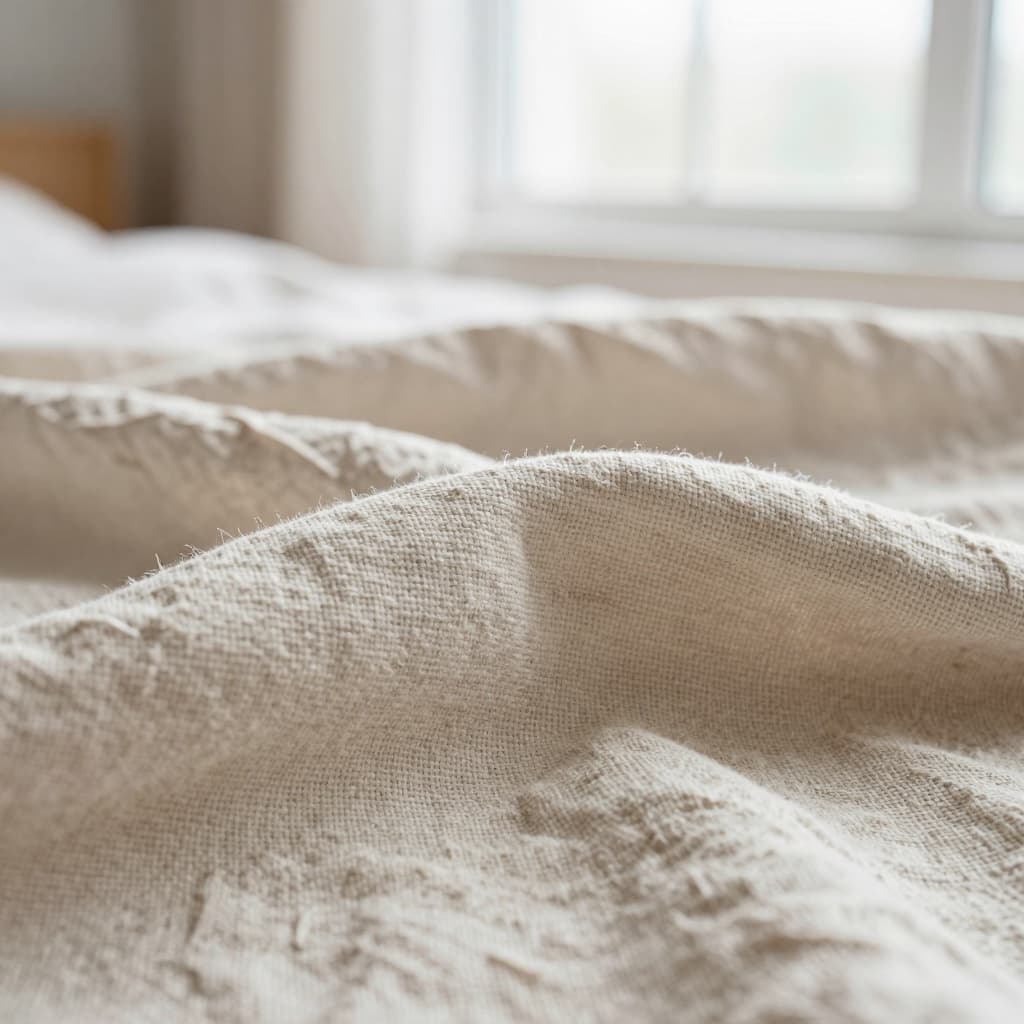
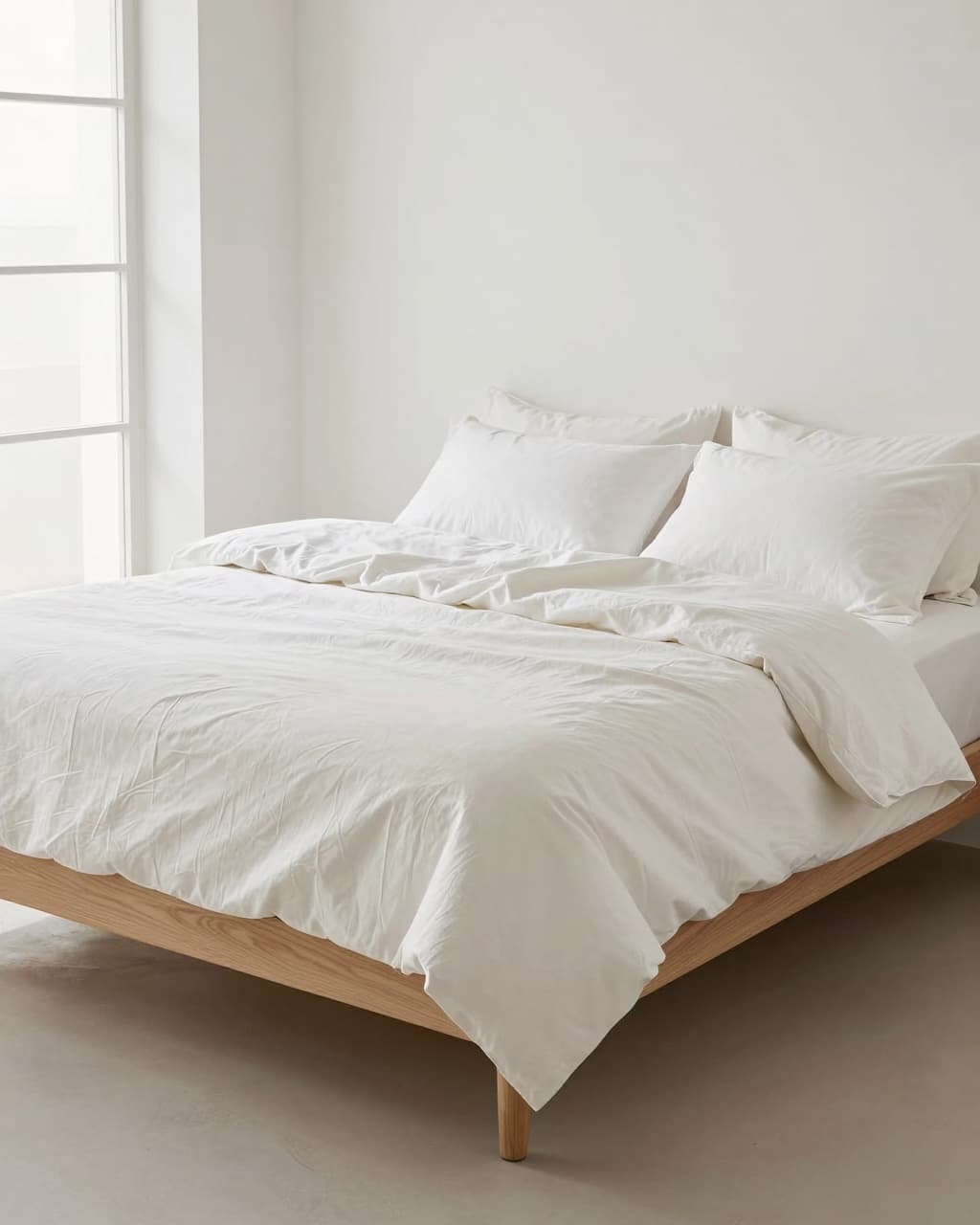
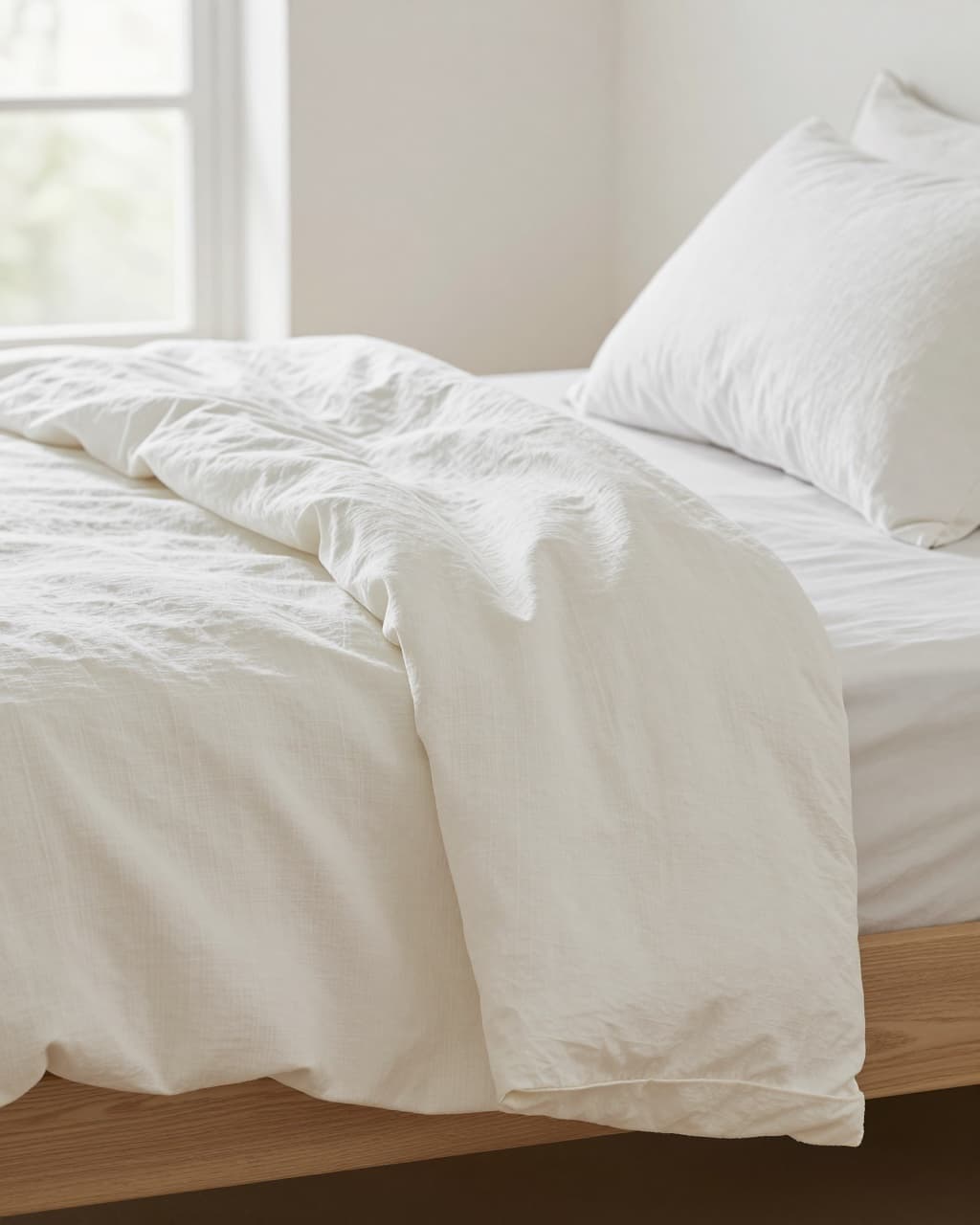
Washed linen breathes and moves moisture away from the skin, so it suits a cool room and people who sleep warm. The stone-washed surface is soft, and linen gets softer with every wash. When you get into bed, linen feels cool at first and warms up quickly against your skin. If you feel the cold easily, sateen feels warmer against the skin. You'll find a comparison in the guide percale, sateen or washed linen.
Clean sheets always feel better than ones you have slept in for a week. Change them about once a week. Many people make it a Friday habit, so the weekend starts with a fresh bed.
5. A calm evening, and the bed only for sleep
Dim the lights an hour or two before bed. Bright light and screens in the evening tell your body it is still daytime. Swap the ceiling light for a floor or table lamp, and leave your phone to charge outside the bedroom. An evening routine can be short: a warm shower, a book and the same order every night. Repeating the same order tells your body that sleep is coming. If your thoughts are racing in the evening, write tomorrow's tasks down on paper before you go to bed. Skip coffee from the afternoon onwards, because caffeine stays active in the body for several hours.
Use your bed only for sleeping. When you don't work, watch series or scroll your phone in bed, your brain learns to connect it with sleep. If you can't fall asleep within about twenty minutes, get up for a while in a dimly lit room and go back to bed when you feel sleepy.
Where to start
You don't have to start all five at once. Begin with the two easiest, such as a cooler room and morning light, and add the others when they feel natural. Give each change a couple of weeks before you judge how well it works.
Products from this article
 Favourite
Washed linen duvet cover
Washed linen · 8 colours
from €119.00
Washed linen pillowcases, set of 2
Washed linen · 8 colours
from €49.00
Washed linen fitted sheet
Washed linen · 8 colours
from €69.00