
Materials
Thread count: what does it tell you about sheets?
What thread count means, what a good thread count is for percale and sateen, and why 1000 is not better than 400.
Pellava, Helsinki · · 6 min
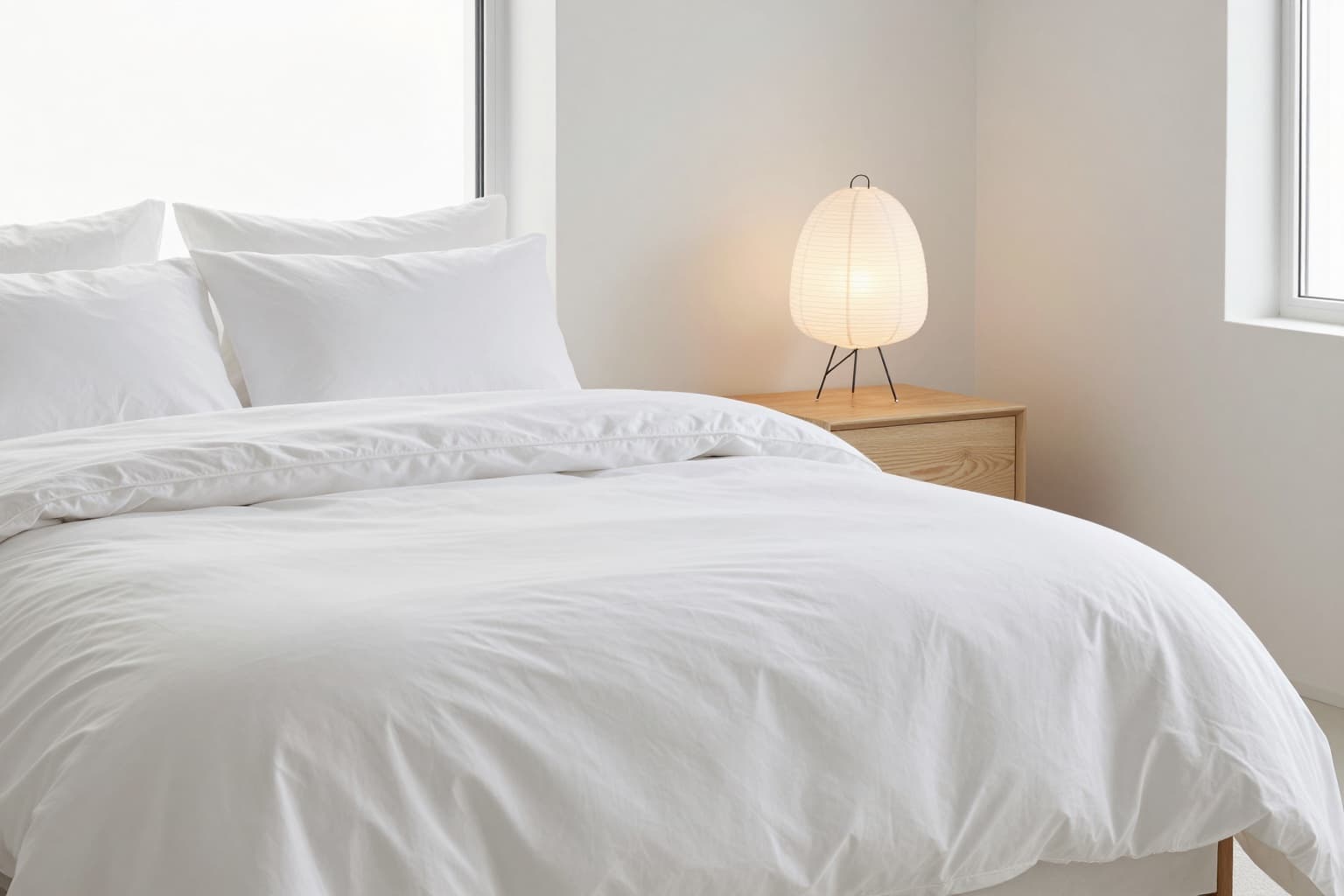
Thread count is the best-known quality figure for cotton sheets, and it is used a lot in selling. A higher number sounds better, but the reality is more complicated. In this guide we explain what thread count means, how it is calculated, what a good number is and what else to look at when you choose sheets.
What does thread count mean?
Thread count tells you how many threads there are in one square inch of fabric. A square inch is an area of 2.54 × 2.54 centimetres. The figure is international, which is why it is given in inches in Finland too. Thread count describes how dense the weave is: the more threads in the same area, the finer the threads and the tighter the fabric.
How thread count is calculated
A fabric has two thread directions. The warp threads run along the length of the fabric, and the weft threads run across them. The thread count is the number of warp and weft threads in a square inch added together. If a square inch has 150 warp threads and 150 weft threads, the thread count is 300.
The method is simple, but it has one loophole: multi-ply yarn. If one thread is twisted from two or three fine strands, some manufacturers count each strand separately. The same fabric can then have a thread count two or three times higher without being any better.
A good thread count for percale
Percale is woven in a plain weave, where the yarn passes alternately over one thread and under one. A plain weave can only hold a limited number of threads, so percale usually has a thread count of 200–400. Ordinary shop-bought percale is often around 200. Our percale has a thread count of 300, which makes the fabric dense and smooth while it still breathes and feels crisp. Above about 400, percale mostly just becomes heavier and stiffer.
A good thread count for sateen
In a sateen weave the yarn passes over four threads and under one. The weave holds more threads than a plain weave, so sateen usually has a higher thread count, around 300–600. Our sateen has a thread count of 400. That is the balance where the fabric is soft, dense and smooth but not heavy. In sateen the quality of the yarn shows directly on the surface, because the long floats remain visible.
Why 1000 is not better than 400
Sheets are sometimes sold with a thread count of 800, 1000 or even 1500. Numbers this high are almost always reached with multi-ply yarn where each strand is counted separately. Multi-ply yarn twisted from fine strands is often made from shorter fibre, and the fabric can be heavy, hot and prone to pilling. Two single-ply threads are usually more durable than six fine strands.
A good rule of thumb is that above 400 for percale and above 600 for sateen, the thread count says more about the counting method than about quality. If the thread count is very high, ask the seller whether the yarn is single-ply. An honest manufacturer can answer.
Why linen has no thread count
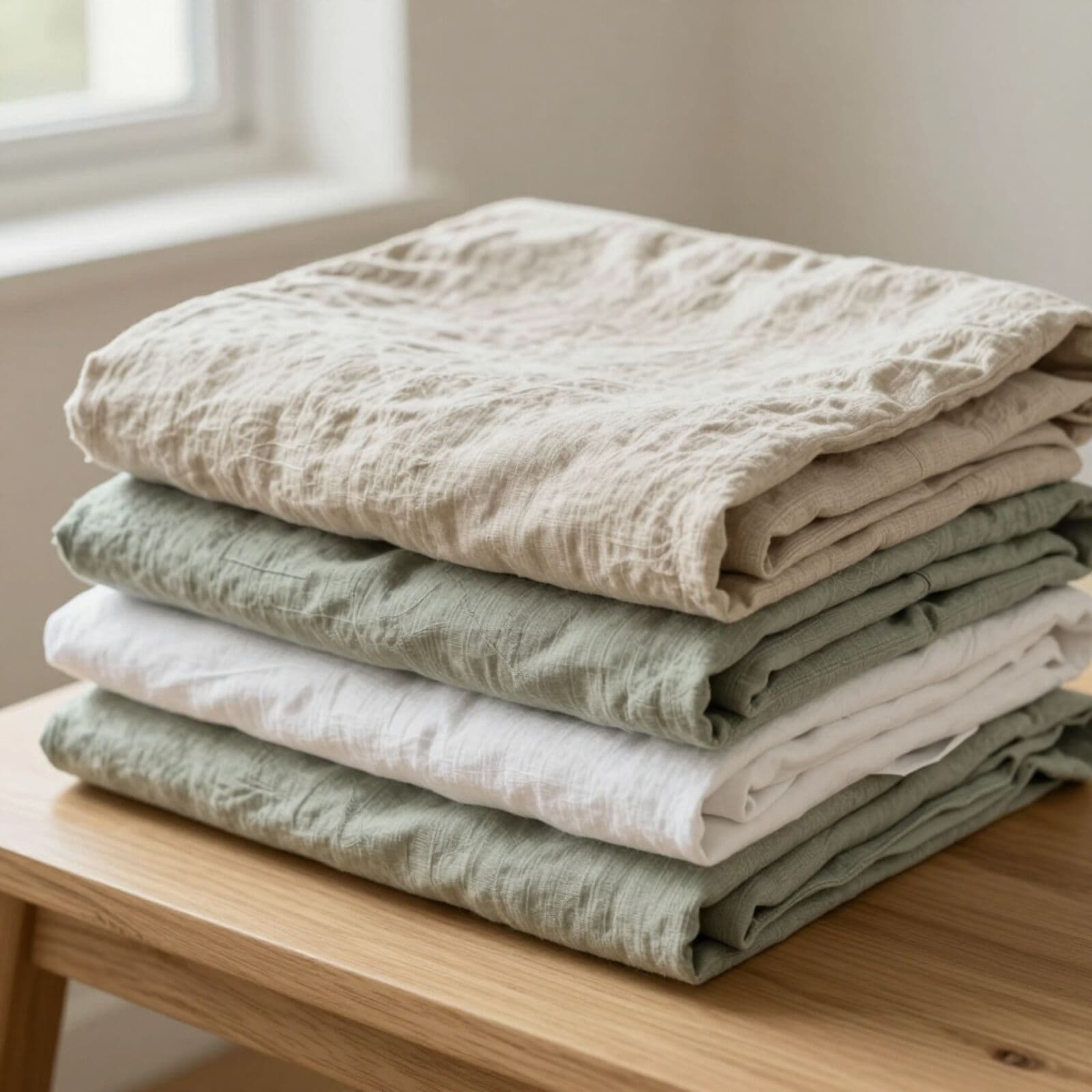
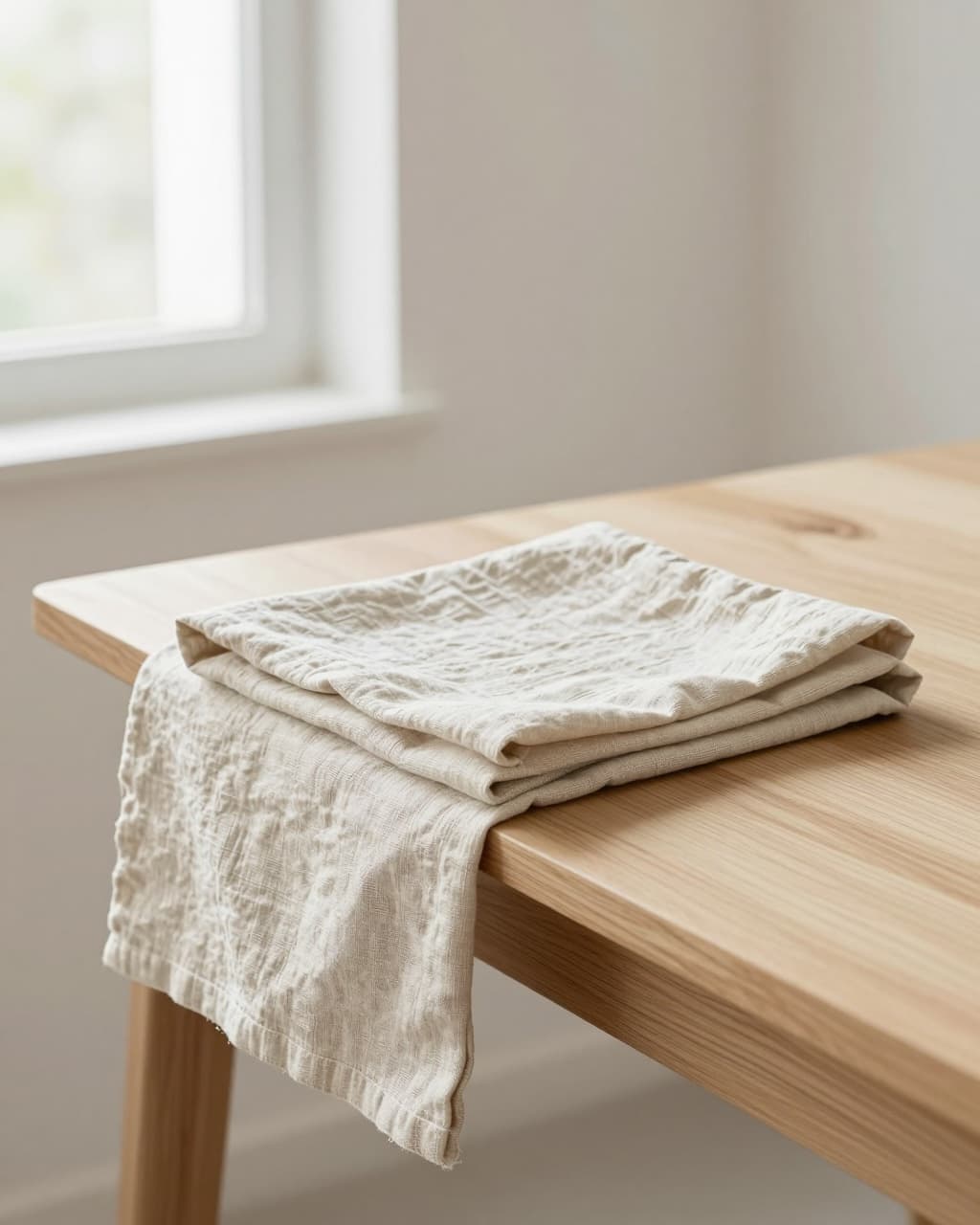
Linen yarn is thicker than cotton yarn, so the thread count of a linen fabric would be low even if the fabric were of very high quality. That is why linen quality is described by weight, meaning how many grams a square metre of fabric weighs. Our washed linen weighs 160 g/m², which is a medium weight for bed linen. Lighter linen feels airier but wears faster. Heavier linen is more durable, but stiffer and slower to dry.
Other things that affect quality
Thread count is just one number. Fibre length matters at least as much. Long-staple cotton makes an even, strong yarn that pills less. Combing removes the short fibres before spinning, so combed cotton is smoother than carded cotton. Our percale and sateen are long-staple combed cotton.
The weave decides the feel. Percale and sateen with the same thread count feel completely different, because the threads run in different ways. The finish matters too: some sheets are treated with chemicals that make them very soft when new, but the effect disappears in the wash. Certificates tell you what is not in the fabric. OEKO-TEX Standard 100 means the fabric has been tested for harmful substances, and GOTS covers organic farming and the whole production chain.
How to choose
Look at the weave, the fibre and the certificates as well as the thread count. For percale 250–400 and for sateen 300–600 is a good range. If you want a crisp, cool sheet, choose percale. If you want a smooth, warm one, choose sateen. If you want a sheet that moves moisture best and needs no ironing, choose linen and look at the weight.
Our numbers
Our percale has a thread count of 300 and our sateen 400, and both are woven from single-ply, long-staple combed cotton. They are woven and sewn in Portugal. Our washed linen weighs 160 g/m², and it is woven and sewn in Lithuania. We give the figures on the product pages so you can compare them with other sheets on the same terms.
Thread count also shows in care. A dense fabric stands up well to 60-degree washes and tumble drying, but an overfilled machine rubs the fabric and makes the surface pill. Leave room in the drum, and your sheets will stay smooth for longer.
Frequently asked questions
What is a good thread count for sheets? Around 200–400 for percale and around 300–600 for sateen. Our percale is 300 and our sateen 400. Is a higher thread count always better? No. A very high thread count is usually reached with multi-ply yarn, which does not make the fabric more durable.
What does thread count mean in plain terms? The total number of warp and weft threads in a square inch. Does linen have a thread count? Linen quality is usually described by weight, because linen yarn is thicker than cotton and the thread count would not be comparable.
Products from this article
 New
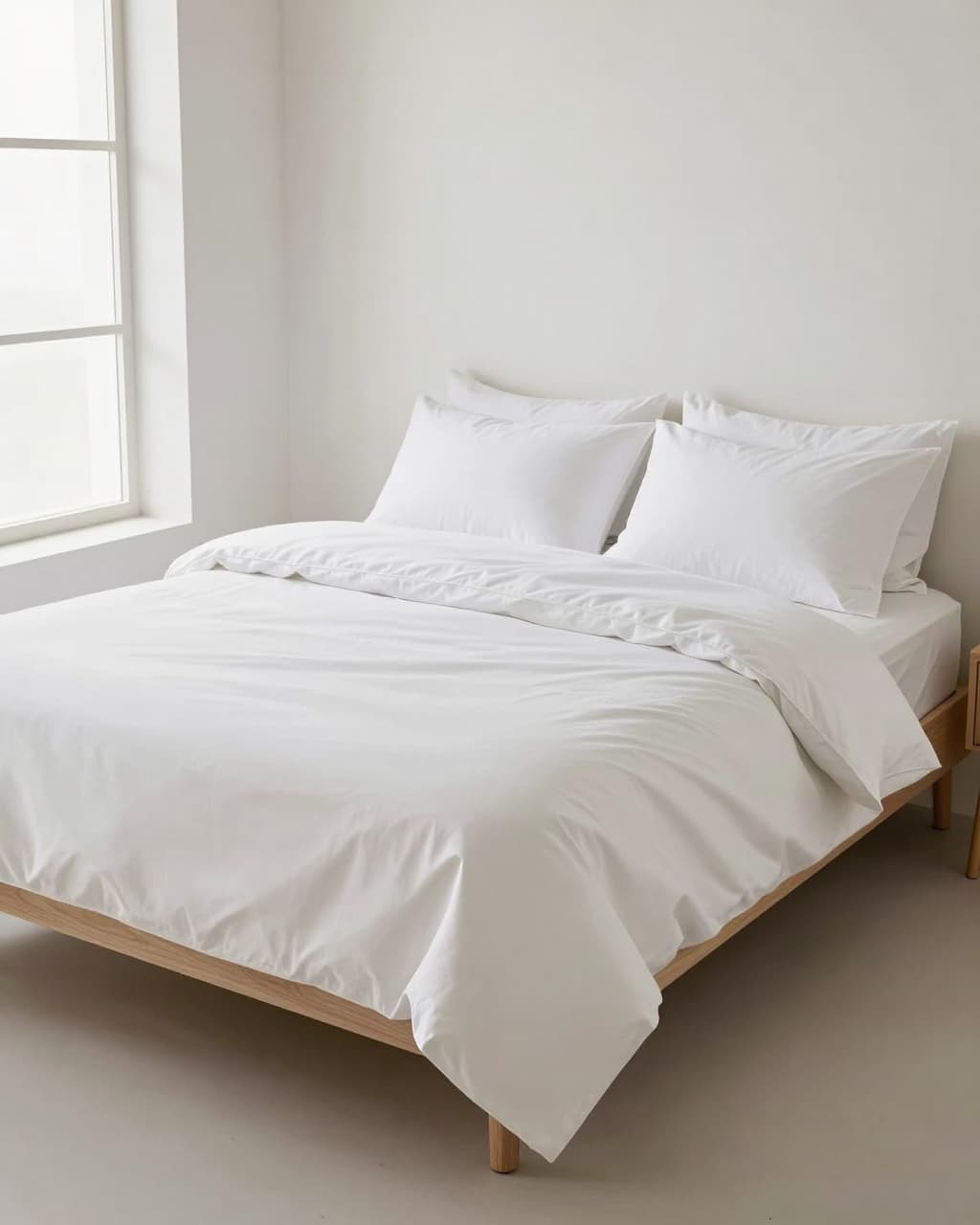
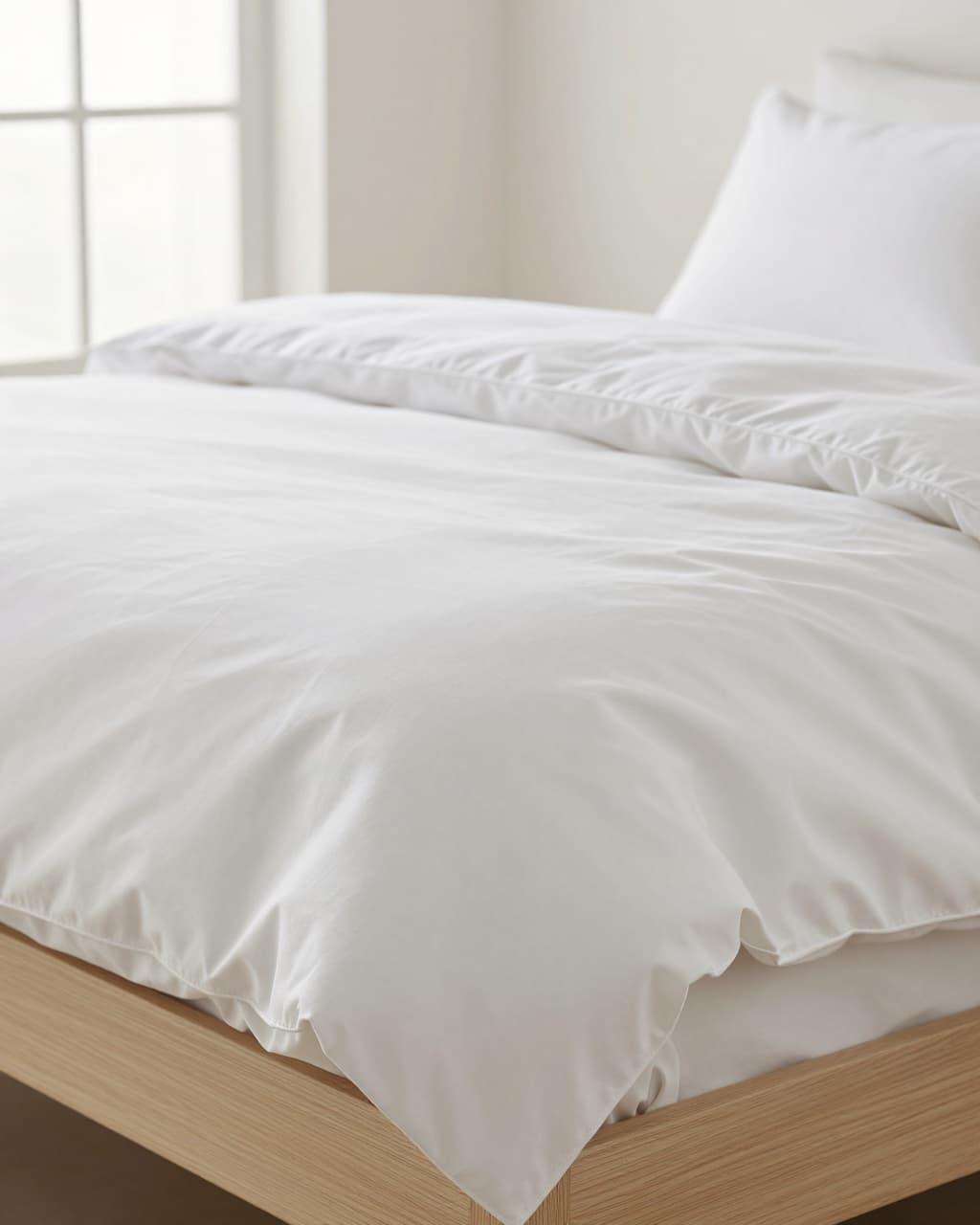
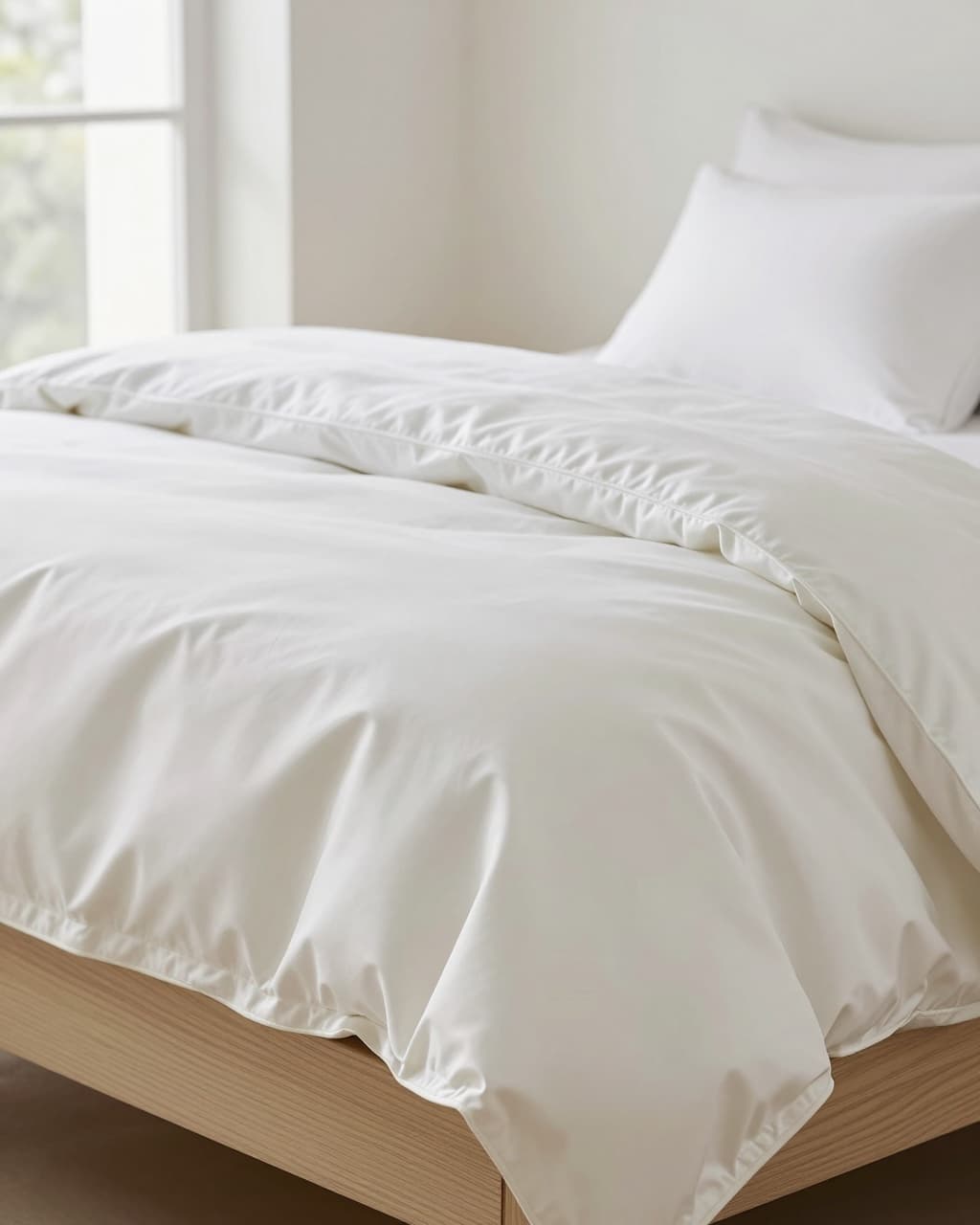
Percale bedding set
Percale 300 · 3 colours
from €89.00
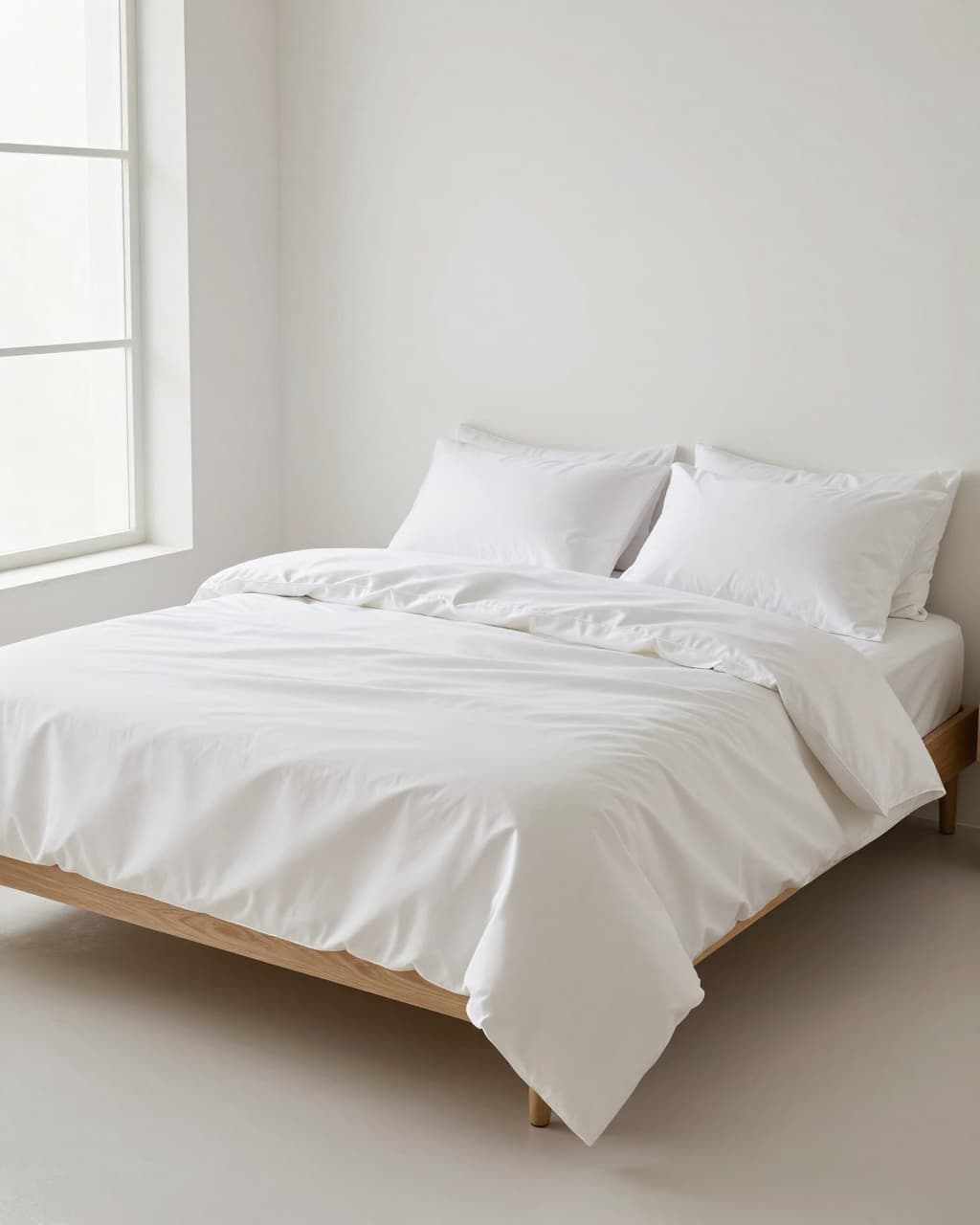
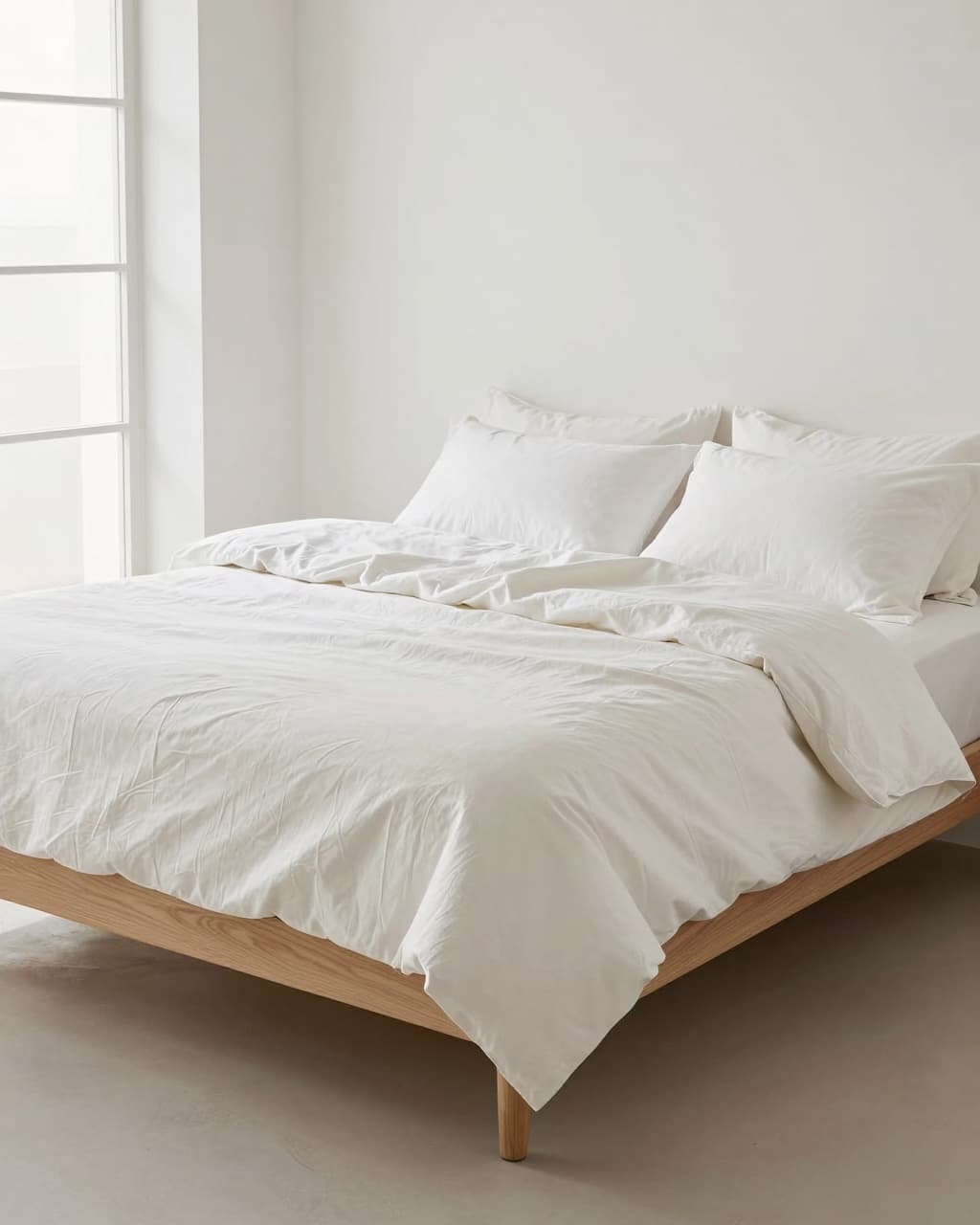
Sateen bedding set
Sateen 400 · 3 colours
from €99.00
 Set
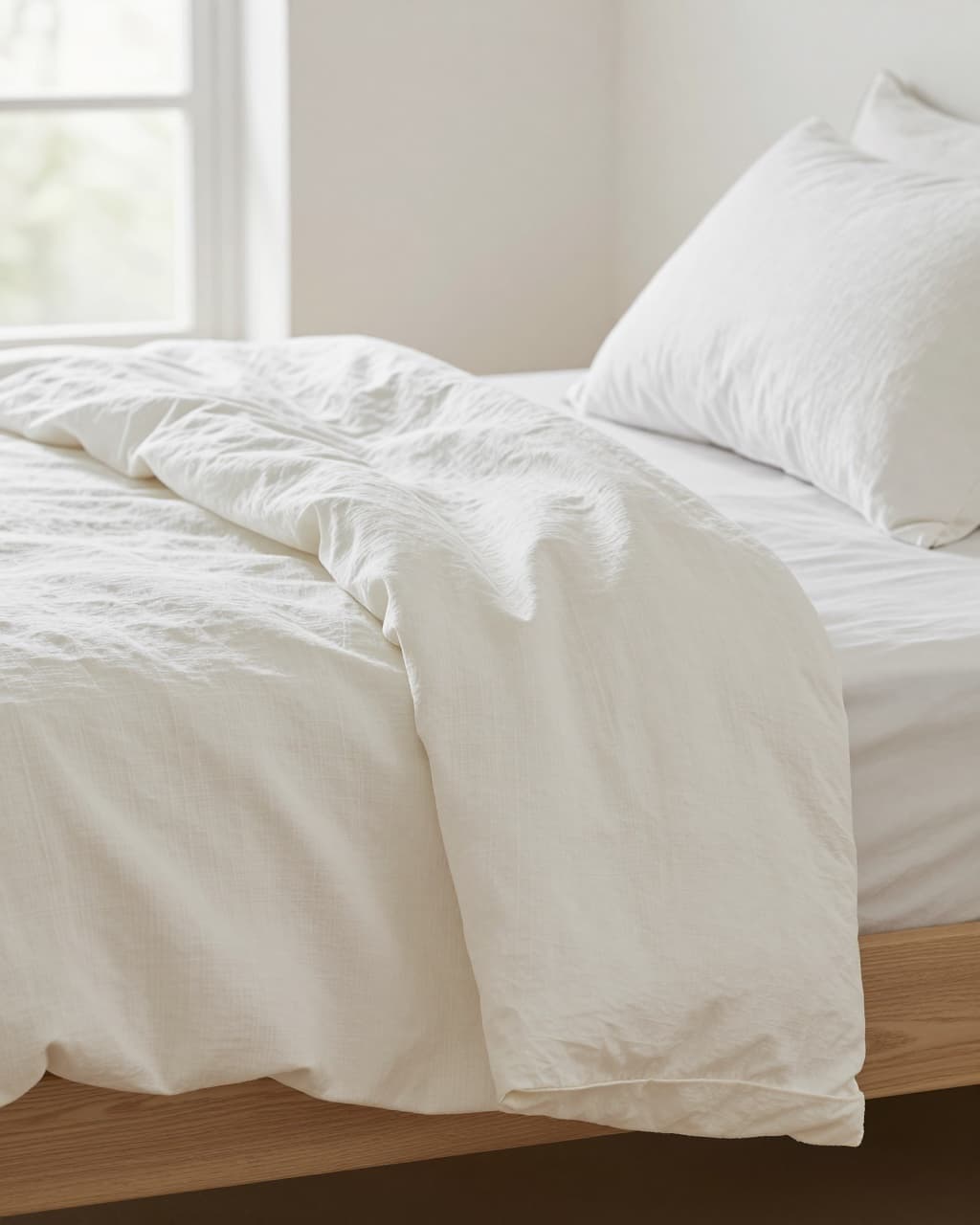
Washed linen bedding set
Duvet cover + 2 pillowcases
from €149.00